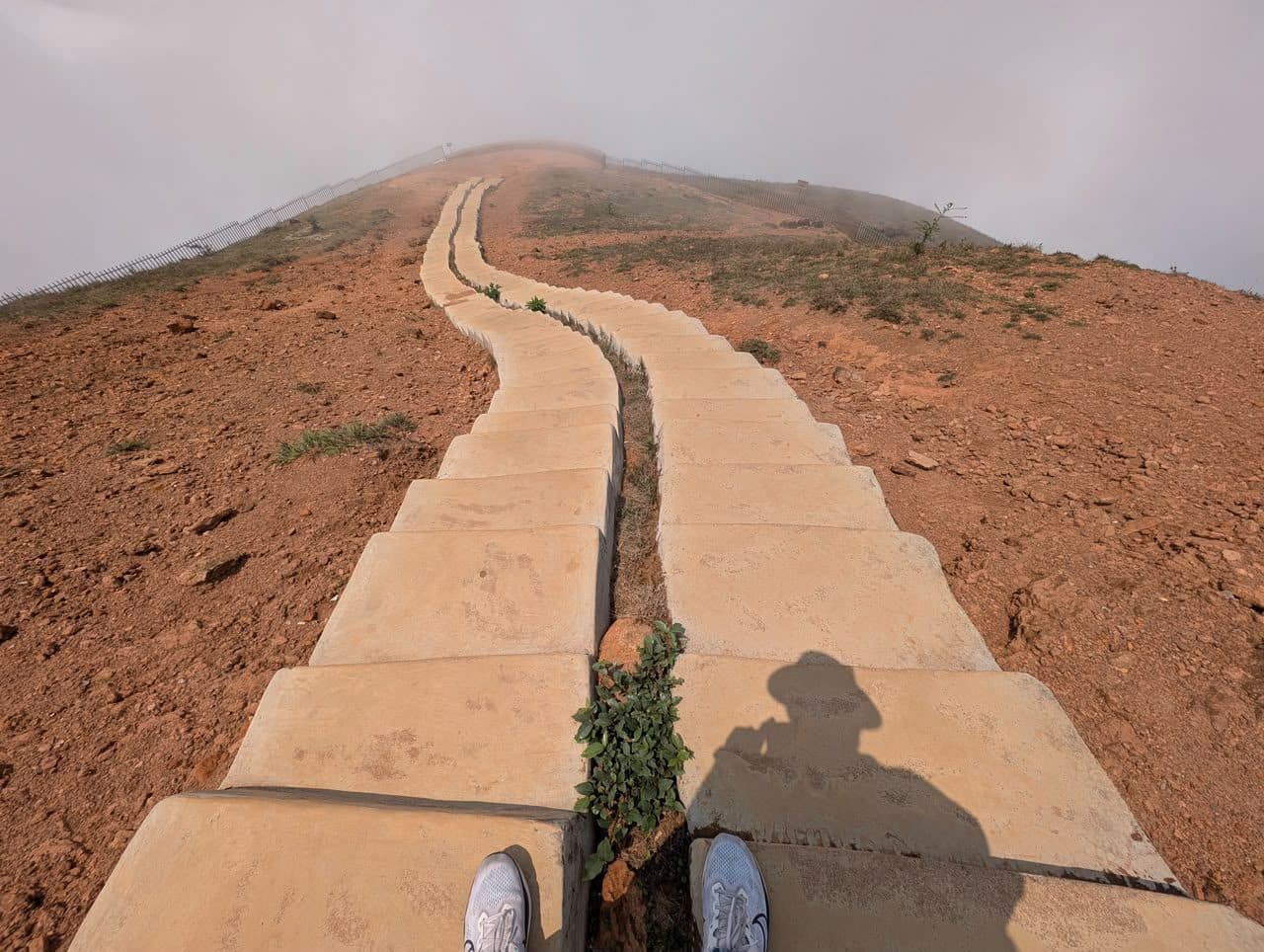
Skandagiri's entire reputation rests on one thing: a blanket of fog sitting in the valley below while the summit stays completely clear, visible only in the hour or so around sunrise. Miss that window and you've just done a fairly ordinary hill climb in the dark. Time it right and it's one of the better views within 100km of Bengaluru.
Why it's a night trek, not a morning one
The cloud layer forms overnight and usually burns off within an hour or two of sunrise, which is why every operator (Tripshala included) starts the climb well before midnight rather than at dawn. You want to already be at the top, settled in, when the light starts changing — not still climbing.
What the night actually looks like
- Assembly around 11pm, on the road by 11:30pm — this is the part people underestimate; you're trekking, not sleeping, through what would normally be your bedtime
- The climb itself takes roughly 2 hours at a steady pace, entirely in the dark aside from torches
- You'll reach the summit around 4am, with a couple of hours to spare before first light — this is when the fort ruins are worth exploring
- Sunrise (and the sea of clouds, conditions permitting) happens around 6am
- Descent and the drive back mean you're home by mid-morning — the rest of your Sunday is untouched
What to actually carry
- A torch or headlamp — non-negotiable, the trail isn't lit
- A warm layer — it's noticeably colder at the top at 4am than the Bengaluru weather suggests
- At least a litre of water — there's nowhere to refill
- Grippy shoes — some sections are loose scree, not paved trail
Best time of year
October to February gives you the best odds of an actual cloud layer, plus cooler, more comfortable night temperatures for the climb. Summer months work too but skip the fog spectacle most people are climbing for.
It's a genuinely moderate trek — no technical climbing — but doing it on effectively no sleep, in the dark, is the part that catches people off guard, not the gradient.