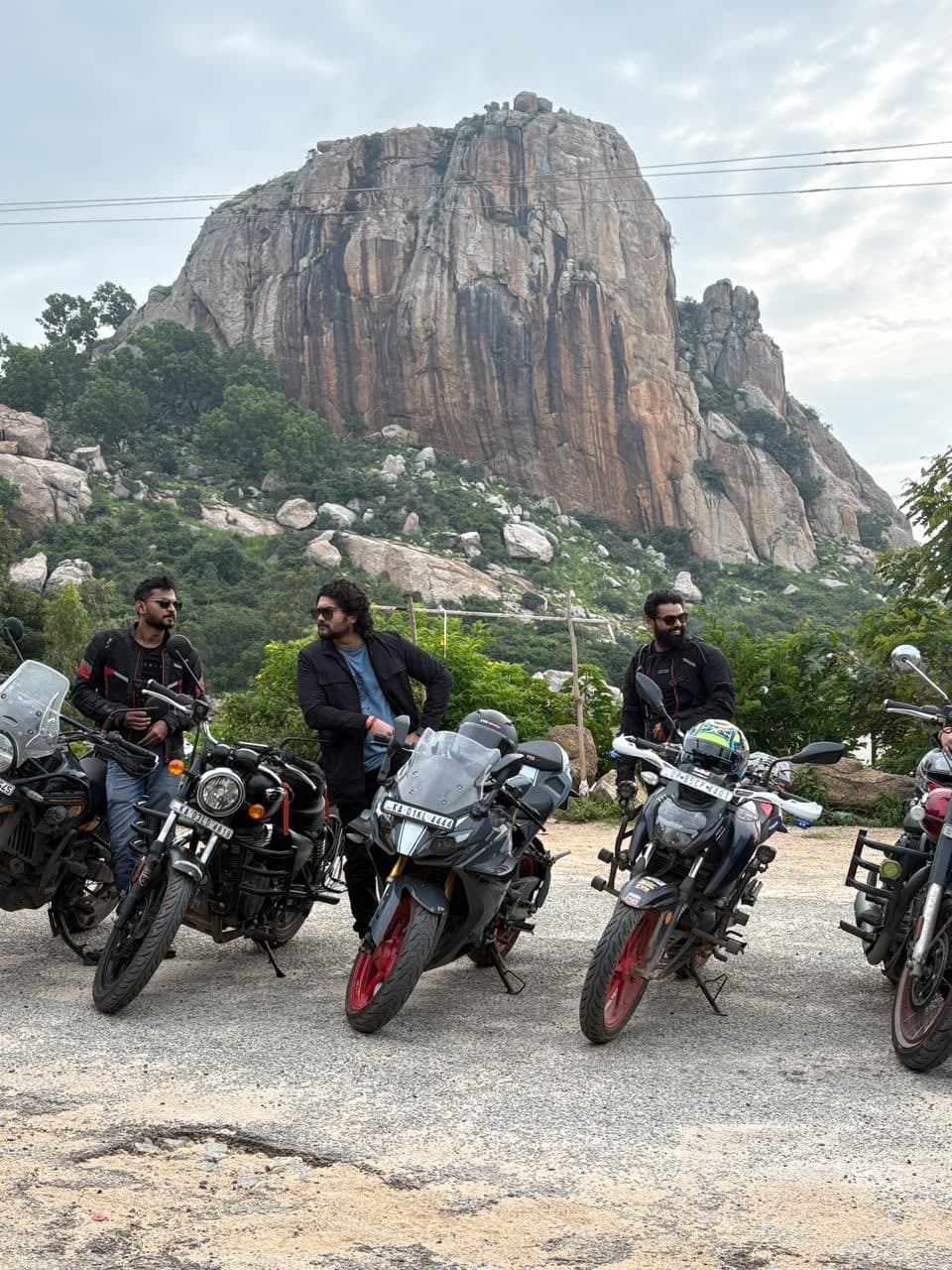
Savandurga sits about 60km west of Bengaluru via Magadi Road, and it's one of the largest monolith hill formations in Asia — a single, mostly bare granite mass that makes for a very different kind of trek than the forested hills further south.
How hard is it, really
Officially moderate, and that's fair — it's about 2km of ascent and 2km of descent, roughly 4 hours round trip at a comfortable pace. The catch is the exposed granite face near the top: no technical climbing, but real elevation with nothing to hold onto, which is a different kind of tiring than a shaded forest trail.
What you'll see along the way
- The Savandurga fort and temple ruins, dating back to around 1340 AD
- Views of the Manchanabele, Thippagondanahalli and Magadi reservoirs from the summit
- Unexpected cave and forest terrain tucked near the top, before the rock opens up again
Best time to go
Late September through February, with October–November as the sweet spot. Summer (March–May) turns the exposed granite into a genuine heat hazard with almost no shade; monsoon (June–September) makes the rock dangerously slippery. This isn't a trek to attempt outside the dry, cool months.
What to wear and carry
- Trekking or sports shoes with real grip — smooth soles on granite is how people slip
- At least a litre of water; there's no shade cover for most of the climb
- Sun protection — cap, sunscreen — even in the cooler months, the exposed rock reflects heat